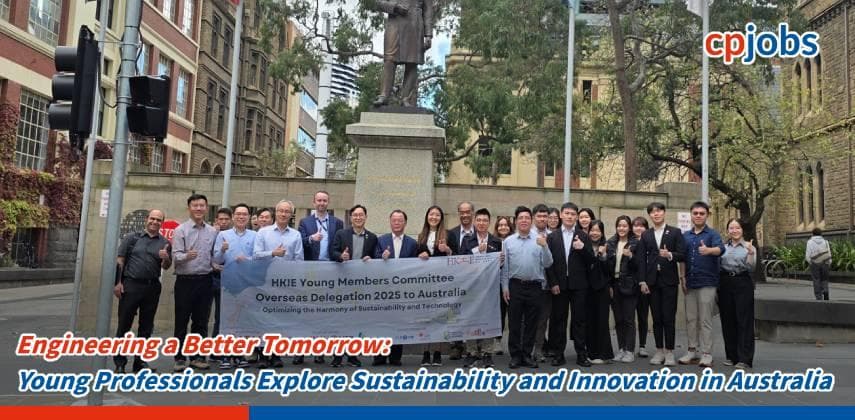
In May 2025, a group of young engineering professionals from Hong Kong embarked on a purposeful journey to Australia, engaging in a week-long programme designed to inspire forward-thinking approaches to sustainability, innovation, and global collaboration. Organised by the Young Members Committee (YMC) of the Hong Kong Institution of Engineers (HKIE), the delegation offered participants a unique opportunity to explore how engineering can drive positive change across communities, industries, and borders.
The visit, held from 3 to 10 May, was closely aligned with the United Nations Sustainable Development Goals, particularly those focused on clean energy, resilient infrastructure, and sustainable urban development. Through a series of practical and aspirational activities in Melbourne and Canberra, participants gained valuable insights into how engineering solutions are being applied to address real-world challenges and improve quality of life. The programme was not only a technical exploration but also a journey of professional growth, cultural exchange, and visionary thinking.
Engineering for Sustainability: Learning from Australia’s Urban Innovations
Throughout the visit, delegates engaged with a variety of engineering projects that exemplify Australia’s commitment to sustainability and community-focused development. Site visits to renewable energy facilities and hydrogen initiatives revealed how clean technologies are being integrated into national strategies to reduce carbon emissions and support long-term energy resilience. These experiences highlighted the role of engineers in shaping energy systems that are not only efficient but also equitable and environmentally responsible.
Participants also observed infrastructure projects that prioritise ecological integrity and urban liveability. From green construction techniques to light rail planning, the programme showcased how engineering can contribute to building cities that are inclusive, adaptive, and future-ready. These encounters provided practical knowledge and sparked new ideas for applying similar approaches in Hong Kong and other urban centres facing similar challenges. The exposure to Australia’s integrated planning and sustainability frameworks offered a fresh perspective on how engineering can be a tool for shaping healthier, more connected communities.
Inspiring Collaboration: Bridging Borders and Disciplines
The core theme of the delegation was the power of collaboration, crossing borders, sectors, and disciplines. Through knowledge-sharing sessions with Australian engineers, researchers, and industry leaders, participants explored emerging technologies and innovative practices that are redefining the engineering profession. These exchanges encouraged a global mindset and underscored the importance of interdisciplinary cooperation in solving complex societal challenges.
The delegation also facilitated dialogue between professionals from diverse backgrounds, including academia, government, and private industry. These conversations revealed the value of cross-sector partnerships in driving innovation and achieving sustainable outcomes. Networking events offered further opportunities to build meaningful relationships and explore potential collaborations. The connections formed during the visit are expected to lead to future joint initiatives in areas, such as smart infrastructure, climate adaptation, and sustainable transport. By fostering dialogue and mutual understanding, the programme reinforced engineering’s role as a bridge between ideas, industries, and communities.
Crafting Change Through Engineering: Careers That Matter
In addition, serving as a powerful reminder of the social impact and purpose embedded in the engineering profession, the delegation inspired the young members on how their skills could contribute not only to technological advancement but also to community wellbeing and global progress. Such an experience broadened their understanding of engineering as a career that blends technical excellence with leadership, creativity, and civic responsibility.
As industries increasingly seek solutions to environmental and social challenges, engineers are uniquely positioned to lead change. Therefore, the visit highlighted the growing demand for professionals who can navigate complex systems, collaborate across sectors, and design solutions that serve both people and the planet. For students and early-career professionals, such programmes not only offered a vital platform for developing the mindset and capabilities needed to thrive in a rapidly evolving global landscape but also helped participants reflect on their own career aspirations, encouraging them to pursue paths that align with the values of sustainability, inclusivity, and innovation.
Looking Forward: Building a Network of Global Engineering Citizens
The success of the visit showcases the importance of continued investment in professional development and international engagement. The HKIE YMC remains committed to supporting young engineers through future initiatives that promote sustainability, innovation, and global citizenship. Upcoming activities will include technical seminars, local workshops, and additional overseas programmes, all aimed at cultivating leadership and cross-sector collaboration.
Gratitude is extended to the Australian hosts for their generous hospitality and commitment to knowledge exchange. Their support played a key role in making the delegation a meaningful and impactful experience for the young members involved. The spirit of openness and collaboration demonstrated throughout the visit has left a lasting impression on participants, reinforcing the value of international partnerships in advancing the engineering profession.
Towards a Shared Future: Engineering as a Catalyst for Global Progress
With each step forward, the engineering profession expands its ability to drive positive changes across societies and ecosystems. Young professionals are encouraged to take part in future programmes that promote innovation, sustainability, and international collaboration. More than strengthening individual careers, these takeaways contribute to a broader movement, one where engineering serves as a catalyst for global progress, community resilience, and shared prosperity.